
After the headlines fade: Trauma, Healing and Light in the Chanukah Season
By Pia Spilke-Shlomo
To paraphrase an idea often attributed to Albert Einstein, there is no reality to darkness; it is simply the absence of light. During this Chanukah season, as we ignite the flames of our candles, we are reminded of our Jewish heritage as light bearers, called to illuminate even the deepest darkness. As individuals and as a community, in the ongoing ripple effects since October 7, we are called again and again to bring light to collective trauma and to engage in an ever-present healing process in the face of atrocities carried out in the name of antisemitism; a painfully familiar part of our collective history, yet no less urgent to confront.
The return of the hostages, both living and deceased, taken on October 7 has brought a measure of relief, reenergizing communal gratitude and inspiring bittersweet tears. That relief exists alongside the omnipresent backdrop of all that was lost to us as a people, and the individual terror and grief endured by those directly affected. It also bears mentioning that we continue to await the return of one more body, Officer Ron Gvili, believed to still be in Gaza.
From a mental and emotional health perspective, this moment does not mark an ending. It marks a transition. Trauma does not resolve when circumstances change; it lingers in the nervous system long after danger has passed, asking to be witnessed, integrated, and tended to with care.
In Israel, the collective psyche remains steadfast in the aftermath of October 7, while Jewish communities across the diaspora have been deeply shaken, forced to confront challenges to our most basic assumptions about safety, predictability, and moral order. The events of October 7 re-exposed the world to a reality Israelis live with daily. But the fact that danger has become familiar does not mean the nervous system is built to sustain it. Many Israelis are asked to live in a constant state of hypervigilance, emotional exhaustion, and relentless threat.
Outside of Israel, as horrified onlookers, we cried, prayed, and ignited the fiercest activism we could, absorbing the shock of watching world leaders grapple with life-altering decisions in a prolonged, highly politicized war as they made agonizing choices about hostages and the burden of carrying a nation through sustained loss. The political polarization still rippling through Israel and the United States compounds this suffering, creating ongoing trauma layered with fear, grief, and moral distress leading to an insidious disconnection infiltrating Jewish communities at large. Trauma at this scale is not limited to those directly harmed; it spreads through families, communities, and an entire people. These are not pathologies. They are expected human responses to prolonged crises.
For American Jews, the trauma has taken on a different but equally destabilizing form. Watching events unfold from afar while confronting an unprecedented rise in antisemitism closer to home has left many feeling unsafe, disoriented, and alone. For some, public Jewish identity, once a source of strength, now carries an undercurrent of risk. For others, the pain lies in the erosion of trust: in institutions, friendships, or spaces that no longer feel safe or reliable.
From a clinical standpoint, it is important to state plainly: trauma is not only cognitive; it is physiological. We cannot simply think our way through it, debate our way out of it, or outrun it with productivity. This kind of vicarious and ambient trauma often manifests quietly. On an individual level, it appears through sleep disruption, irritability, withdrawal, heightened anxiety, or a persistent sense of unease. On a communal level, the bonds that hold us together are in some ways, challenged, creating the need for intentional nurturing and support. Without spaces that openly and sensitively address grief, helplessness, anger, confusion and fear, parts of the community may unwittingly become disenfranchised creating isolation at the very moment connection is most essential.
Healing requires restoring a sense of safety in the body and nervous system. This begins at the individual level. Personal healing and self-care must be actively advocated for and encouraged, not dismissed as secondary or self-indulgent. Simple, consistent practices, breath regulation, movement, prayer, routine, intentional rest, and limits on exposure to distressing media, are not luxuries. They are stabilizing interventions that allow individuals to remain emotionally regulated, present, and functional.
At the same time, individual healing can not occur in isolation. With our modern evolved understanding of emotional health and research in the field of psychology, more and more studies emphasize the crucial necessity of connection as an inextricable part of mental health and productive functioning. As with so many concepts now trending in modern society, Jewish tradition offered the blueprint long ago, with its emphasis on the importance of community. Jewish life is structured around communal responsibility; showing up, bearing witness, extending care, and ensuring that no one carries burden alone. It is precisely this ethic that has kept the Jewish people strong, outlasting empires and persevering in existence despite geographic disunity and the ever-present threats to our homeland.
In moments of collective trauma, this communal framework becomes even more essential. When individuals are supported in tending to their own nervous systems while simultaneously remaining connected to others, healing becomes possible on both levels. Community does not replace self-care; it amplifies it. Likewise, self-care is not a retreat from responsibility, but what allows individuals to remain engaged, compassionate, and available to one another. It’s a time to stoke the flames already brightly burning within our vibrant communities, fostering achdut (togetherness) and compassion among ourselves. It is also an opportunity for extra outreach to those lacking a strong communal anchor, stepping beyond sectarian or political lines that have long perpetuated division.
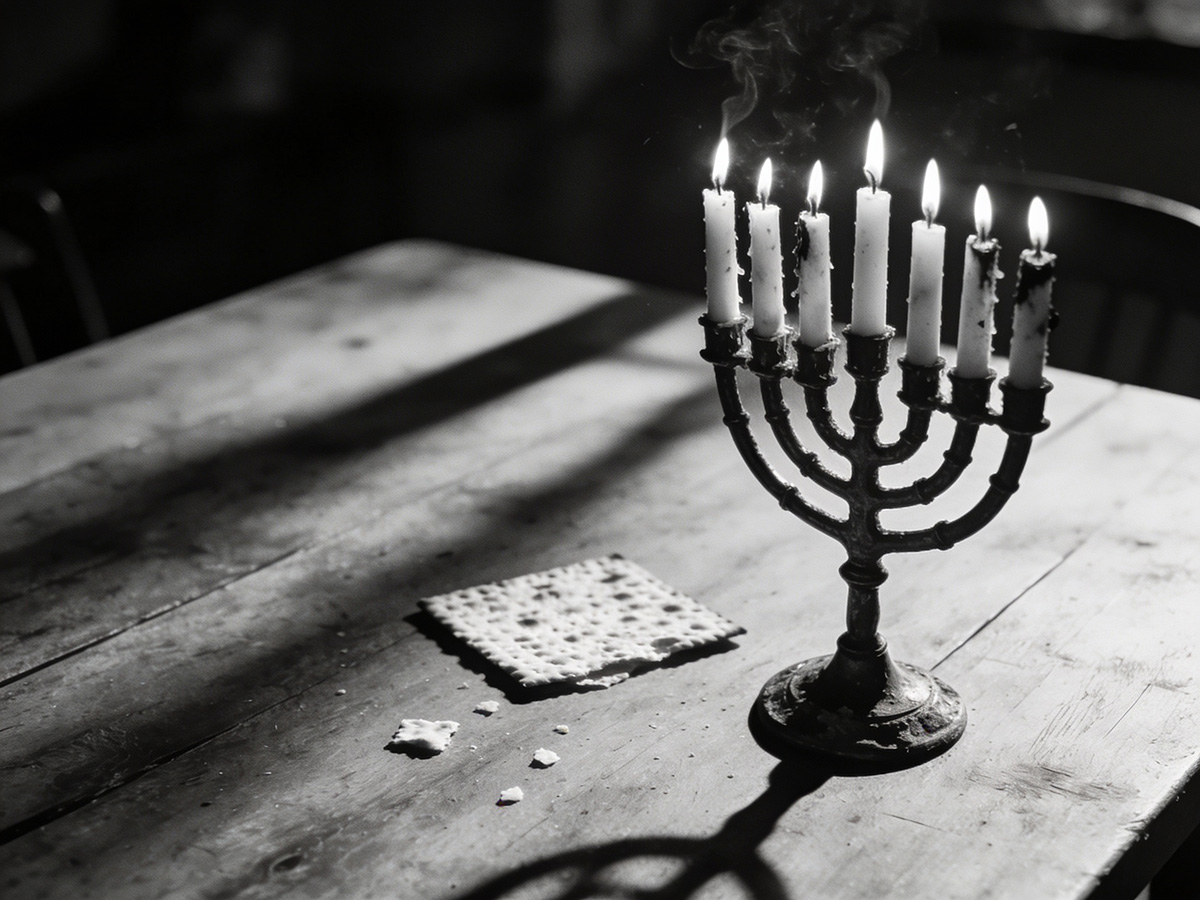
Chanukah, the holiday of lights, offers a profoundly relevant framework for this moment. The miracle of the oil is often described as inexplicable abundance, but a deeper lesson is sufficiency. There was enough oil for one day, and that was enough to begin. Trauma recovery works the same way. We are not required to feel hopeful all at once or to reach clarity on a fixed timeline. We are only asked to tend to the light that is available now.
The Maccabees did not wait for certainty or safety to restore sanctity. They reclaimed it under fragile conditions. Lighting the menorah each night is an embodied ritual of resilience. Ritual provides structure when the world feels unstable, reminding us that light is not the absence of darkness, but the response to it.
Judaism has long understood what psychology now confirms: ritual calms the nervous system, shared meaning fosters resilience, and community mitigates isolation. Trauma narrows perspective and heightens reactivity, which is why compassion toward others and ourselves becomes essential. Jewish tradition cautions against the hardening of the heart, even in moments of justified fear. Creating communal spaces that allow for grief, disagreement, and emotional honesty without shaming or silencing is itself an act of healing.
As we move through Chanukah this year, we do so carrying both relief and unresolved pain. Honoring those who have returned means caring for those, here and in Israel, whose inner worlds remain fractured. Healing is slower than breaking, quieter than war, and far less visible than outrage. But it is the work that has always sustained the Jewish people: the commitment to not only remain vigilant defenders, but to simultaneously remember our humanity; the commitment to not only remain alive, but whole.
Pia Spilke-Shlomo is an E-RYT 500 yoga instructor and Social-Emotional Learning (SEL) educator working in Jewish day schools. She is the author of Thank You for Everything, a children’s book about gratitude, and is currently pursuing a master’s degree in Marriage and Family Therapy at Yeshiva University’s Ferkauf Graduate School of Psychology.